

When it comes to deciding between reusable medical devices and single-use medical devices or disposable medical supplies, healthcare professionals must consider the pros and cons of each. The reasons go beyond infection control. Cost efficiency, regulatory burden, and environmental impact each exert their own pressure.
For healthcare professionals and OEM buyers weighing single-use vs reusable medical devices, the path forward requires understanding exactly where each option outperforms the other.
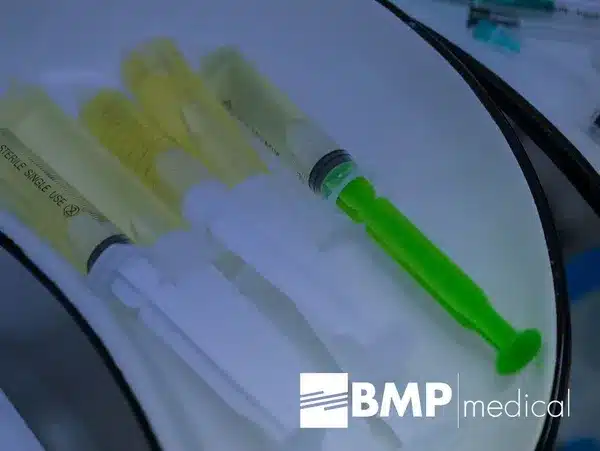
Single-use devices are those that are used on one patient during only one procedure and then disposed of. Reusable medical devices, on the other hand, are those that require reprocessing after a procedure, such as cleaning, disinfecting, and sterilization.
When selecting a single-use or disposable item over a reusable medical device, the number one factor to consider is risk to patient safety. Other factors include cross-contamination, environmental impact, cost-efficiency, and time savings.
| Single-Use Medical Devices | Disposable Medical Supplies | Reusable Medical Devices |
|---|---|---|
| Devices designed and labeled by the manufacturer for one patient use, then discarded.
Examples: Syringes, catheters, surgical staplers, biopsy forceps |
Broader category of low-cost, single-patient consumables used during care delivery.
Examples: Gloves, gowns, drapes, tubing sets, wound dressings |
Devices engineered to withstand repeated sterilization and use across multiple patients.
Examples: Surgical scissors, endoscopes, forceps, retractors |
There is no doubt that there has been a steady shift to disposable medical supplies and single-use medical devices over the years, and the trend is accelerating — the global single-use device market is projected to grow from $176 billion in 2025 to nearly $287 billion by 2034 1.
Healthcare-associated infections (HAIs) are a genuine threat to patients and can be very costly to hospitals and clinics in more ways than just exposure to insurance claims. Healthcare centers with elevated HAI rates may face direct financial penalties, including reduced Medicare and Medicaid payments.
Reusable medical devices have always carried a degree of risk for cross-contamination, surgical site infections, and HAIs far greater than that of a single-use device. Operations and procedures with reusable medical devices place patients at unnecessary risk. The numbers make the case clearly: according to the CDC, on any given day, roughly 1 in 31 hospitalized patients contracts a healthcare-associated infection 2. Annually, that totals nearly 1.7 million patients with HAIs in the United States alone 3.
Single-use devices, by contrast, are sterilized and individually packaged in cleanroom manufacturing environments, eliminating the contamination risks associated with reprocessing. This is the single strongest reason behind the industry's shift toward using single-use medical devices and disposable medical supplies. As infection control standards tighten, that shift is unlikely to reverse.
The most prominent issue with single-use medical devices and disposable supplies is the increase in biomedical waste and related environmental concerns. Disposing of biomedical waste – the supplies, materials, and devices contaminated with blood, bodily fluids, secretions, or excretions – must follow certain protocols. Biomedical waste is considered hazardous waste, and improper disposal can lead to cross-contamination and HAIs. In the United States alone, hospitals generate an estimated 4.3 million tons of waste each year 4 – of that, the WHO estimates 15% is hazardous (i.e., infectious or toxic) 5.
Single-use vs reusable medical devices: Pros and cons
| Factor | Single-Use Medical Devices | Reusable Medical Devices |
|---|---|---|
| Patient Safety Risk | Minimal; sterile, single-patient use eliminates cross-contamination | Higher; reprocessing failures can leave residual bioburden |
| Infection Control | Strong; no reprocessing means no HAI risk from the device itself | Dependent on sterilization compliance and validation |
| Upfront Cost | Lower per unit | Higher initial investment in durable instruments and sterilization infrastructure |
| Long-Term Cost | Predictable recurring spend; no hidden reprocessing costs | Ongoing costs for cleaning supplies, personnel training, equipment maintenance, and repair |
| Environmental Impact | Generates biomedical waste; recyclable thermoplastic options are emerging | Requires water, energy, and chemical disinfectants; the ecological footprint of reprocessing is significant |
| Time to Use | Immediate; delivered sterile and ready | Requires cleaning, sterilization, inspection, and repackaging between uses |
| Regulatory Complexity | Straightforward; validated once at manufacture | Ongoing reprocessing validation and compliance documentation required |
Medical waste is a critical factor in deciding between single-use and reusable medical devices. As single-use products are often viewed as environmentally unfriendly, manufacturers are working to change that perception. Some companies offer disposables made with biodegradable thermoplastic as a viable, environmentally friendly solution, as they can be easily recycled.
Reusable instruments carry their own environmental issues. Decontamination and sterilization require large amounts of water, detergents, chemical disinfectants, specialized cleaning equipment, steam production, and electricity. The impact these detergents and disinfectants have on the environment poses ecological concerns, and the additional energy drain to clean them is costly.
Moreover, there is a considerable process involved in reusing a medical device. Ongoing hidden costs for reprocessing add up quickly: cleaning supplies, personnel and training, equipment, decontamination or sterilization processes, repair and replacement, tracking and accounting, and other related upkeep. Single-use devices, on the other hand, are delivered ready for immediate use, and no time is spent on reprocessing, keeping costs more predictable and contained.
When weighing the pros and cons of single-use vs. reusable medical devices, the primary factor is patient safety. Single-use medical devices offer clear advantages: no risk of HAI from the product, immediate usage, and a growing list of environmentally friendly solutions, all of which prove more cost-efficient and offer time savings that reusable devices cannot match.
Though there is a place for reusable devices in medical practice and healthcare, the trend toward single-use medical devices and disposable medical supplies will continue to expand as newer, more efficient advances in medical device manufacturing and production contribute to higher-quality instruments at lower cost.
For OEMs and procurement teams considering this switch, the question is no longer whether to move toward single-use, but how quickly they can do so with the right manufacturing partner.
References: